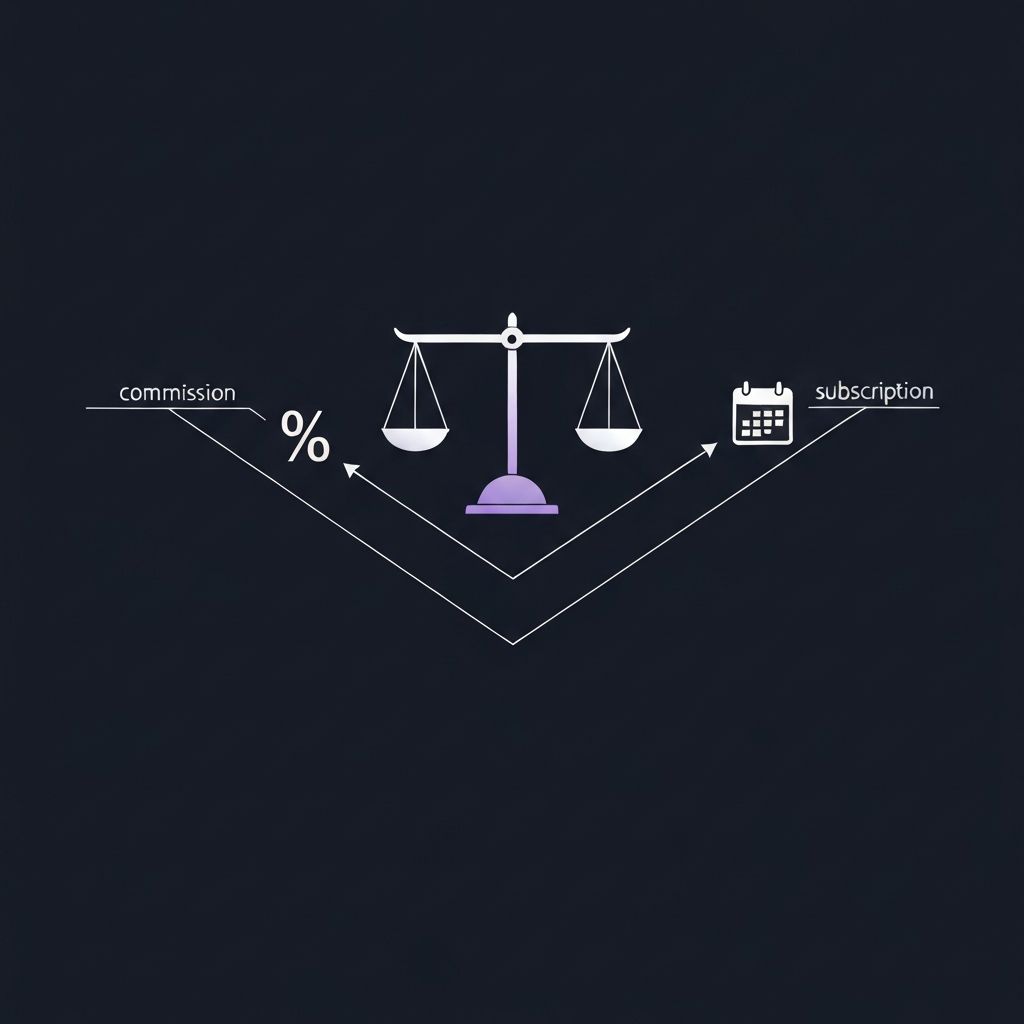
When you evaluate a new distribution channel, most of the attention goes to reach, audience quality, and integration complexity. The pricing model tends to get less scrutiny.
That's worth correcting — because for AI commerce channels, the pricing structure tells you something fundamental: are you working with a tool that you pay to use, or a marketplace that has a stake in your sales?
Tool vs. marketplace: the distinction that matters
Monthly fee channels are structured as software products. You pay a recurring subscription regardless of what you sell. The channel earns its fee whether your products convert well or poorly.
Commission-only channels are structured as marketplaces. They earn a percentage of each completed transaction and nothing before that. If you sell nothing, they earn nothing.
The incentive problem in a new, unproven channel
AI commerce is genuinely new territory. In that context, a monthly fee model creates a structural misalignment.
The channel collects its fee on day one. It collects the same fee if it delivers results and if it doesn't. There is no financial pressure to optimise harder on your behalf.
Why a marketplace model aligns differently
A commission-only marketplace has a straightforward interest: your sales need to happen for it to get paid. This structure creates a baseline pressure to make the channel function.
Questions worth asking before you sign up
- Does the channel earn when I earn?
- What happens to my fee if performance is poor?
- Is there evidence of results in my category?
- What does the channel do differently if I'm underperforming?
- Am I paying for tooling or for distribution?