The marketing funnel that brand teams have used for two decades — awareness, consideration, conversion, loyalty — was built around human-driven behavior. A person sees an ad. They visit a website. They add to cart. They check out.
That model assumed the human was the active agent at every stage. In agentic commerce, most of that active behavior is no longer done by the human. An AI agent does it.
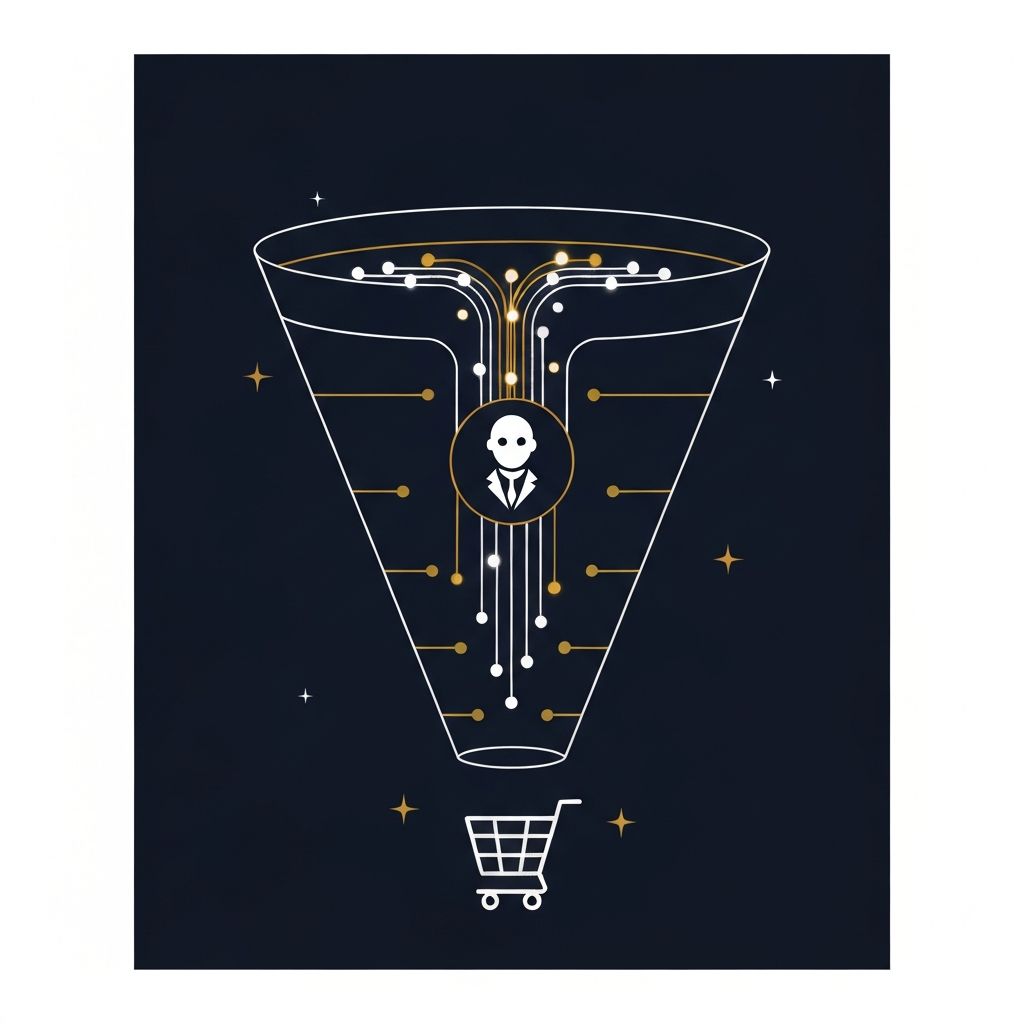
The agentic purchase funnel: four stages
Stage 1: Intent formation. The journey begins when a user forms an intent and delegates it to an AI agent. The user's phrasing at this stage is the most important input in the entire funnel — and brands don't hear it.
Stage 2: Agent retrieval and evaluation. The agent retrieves candidate products from sources it can query. This stage is entirely invisible to the brand. There is no impression, no session, no scroll depth.
Stage 3: Agent recommendation. The agent narrows its shortlist to a recommendation set — typically one to three products — and presents it to the user. This is the first moment of brand visibility.
Stage 4: Purchase. If the user accepts the recommendation, the purchase completes.
What this means for CAC and attribution
Customer acquisition cost in the agentic funnel is structurally different from CAC in performance marketing. There's no cost-per-click, no bid, no impression. The "cost" is the investment in product data quality and content, amortized across every query those products match.
The CAC for the first agentic order is relatively high (content investment, onboarding). The marginal CAC for each subsequent order driven by the same listing approaches zero.